
Eye accommodation — how to improve and train focusing flexibility
- #vision therapy
- #exercises
- #accommodation
- #eye care
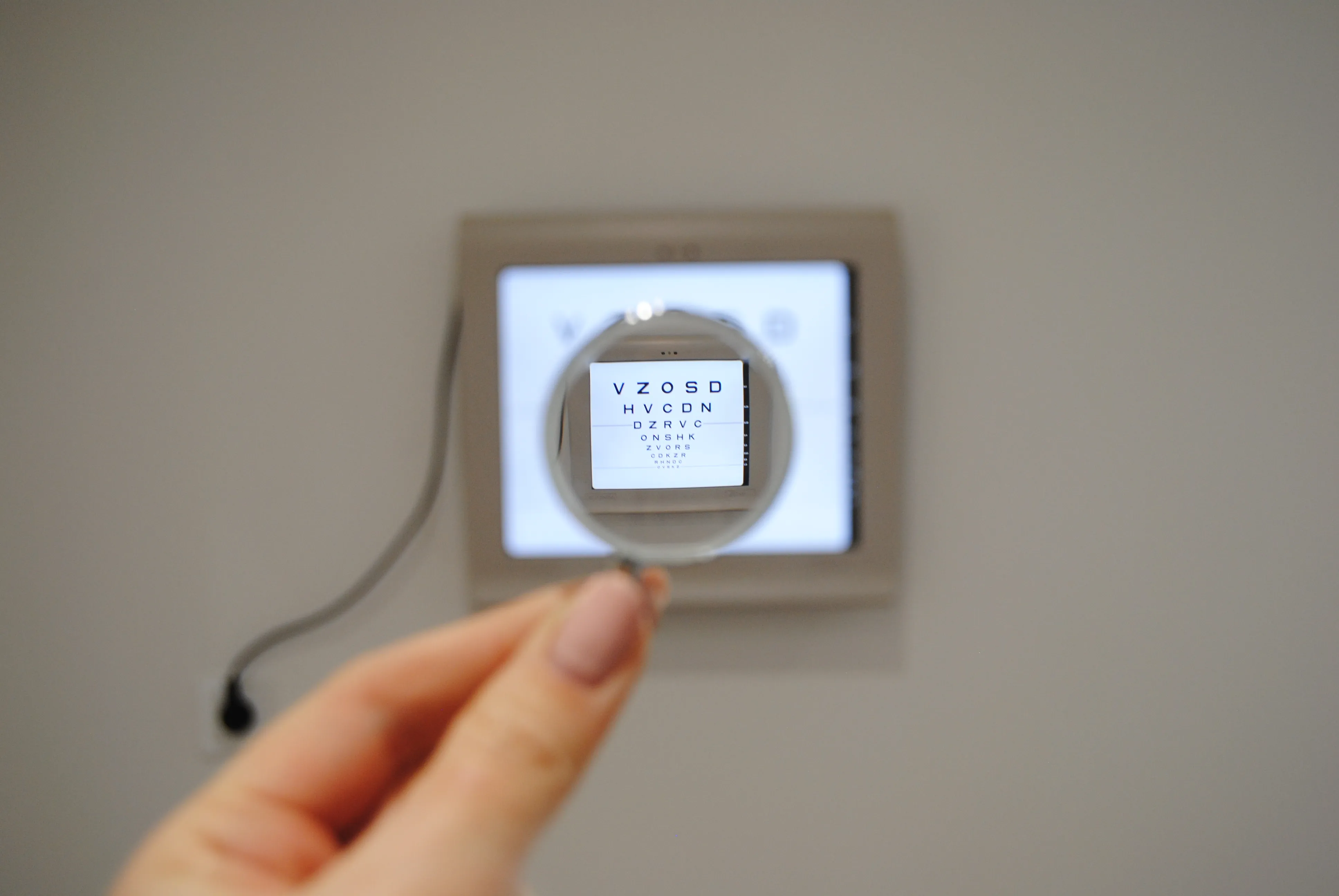
You shift your gaze from the board to your notebook, from the road to the dashboard, from the monitor to the person you’re talking to — and each time the eye must refocus the image in an instant. Accommodation is responsible for this. When it works well, we don’t even notice the switching. When it weakens, the near world becomes blurry and the eyes tire quickly.
What is accommodation?
Accommodation is the eye’s ability to change its focusing power through the work of the ciliary muscle, which reshapes the lens. It lets us see both distant objects and those right in front of our nose sharply. In children, accommodation is very strong, so its disorders are easy to miss — they are often mistaken for a lack of concentration.
Signs of accommodative disorders
- a blurry image when shifting focus from far to near (or the other way round),
- tired, burning eyes after near work,
- headaches, especially after school or at the computer,
- difficulty reading and copying from the board,
- brief “misting” of vision.
Accommodative disorders often go hand in hand with convergence insufficiency — which is why I assess both functions together in the clinic.
Exercises to improve accommodation
The methods below are educational — the right set and lens powers are selected by a specialist after an examination.
Flippers (+/− lenses)
A frame holding pairs of plus and minus lenses. Reading text alternately through the “plus” and “minus” lenses forces the ciliary muscle to refocus quickly — training accommodative flexibility, i.e. the speed and smoothness of switching focus.
Hart chart — far and near
The patient alternately reads letters from a chart hung in the distance and from an identical, small chart held up close. These far–near “jumps” build the stamina and skill of accommodation.
“Push-up” exercise
Slowly bringing small text closer until it blurs, then holding it right at the edge of clarity — strengthens the ability to sustain a long near-work effort.
Eye care: habits that help
Exercises work best paired with good habits:
- The 20-20-20 rule — every 20 minutes of near work, look for 20 seconds at something at least 6 metres (20 feet) away,
- keep a distance of about 30–40 cm from a book or screen,
- ensure good, even lighting,
- take regular breaks and limit screen time for the youngest.
Blurry near vision in a child is neither a whim nor laziness — it’s a signal worth examining.
When to see a specialist?
If the symptoms recur, book an optometric-orthoptic examination. I assess accommodation, convergence and binocular vision, and if needed I recommend vision therapy or the right correction.
Would you like to talk about your child’s eyesight? Write or call.